
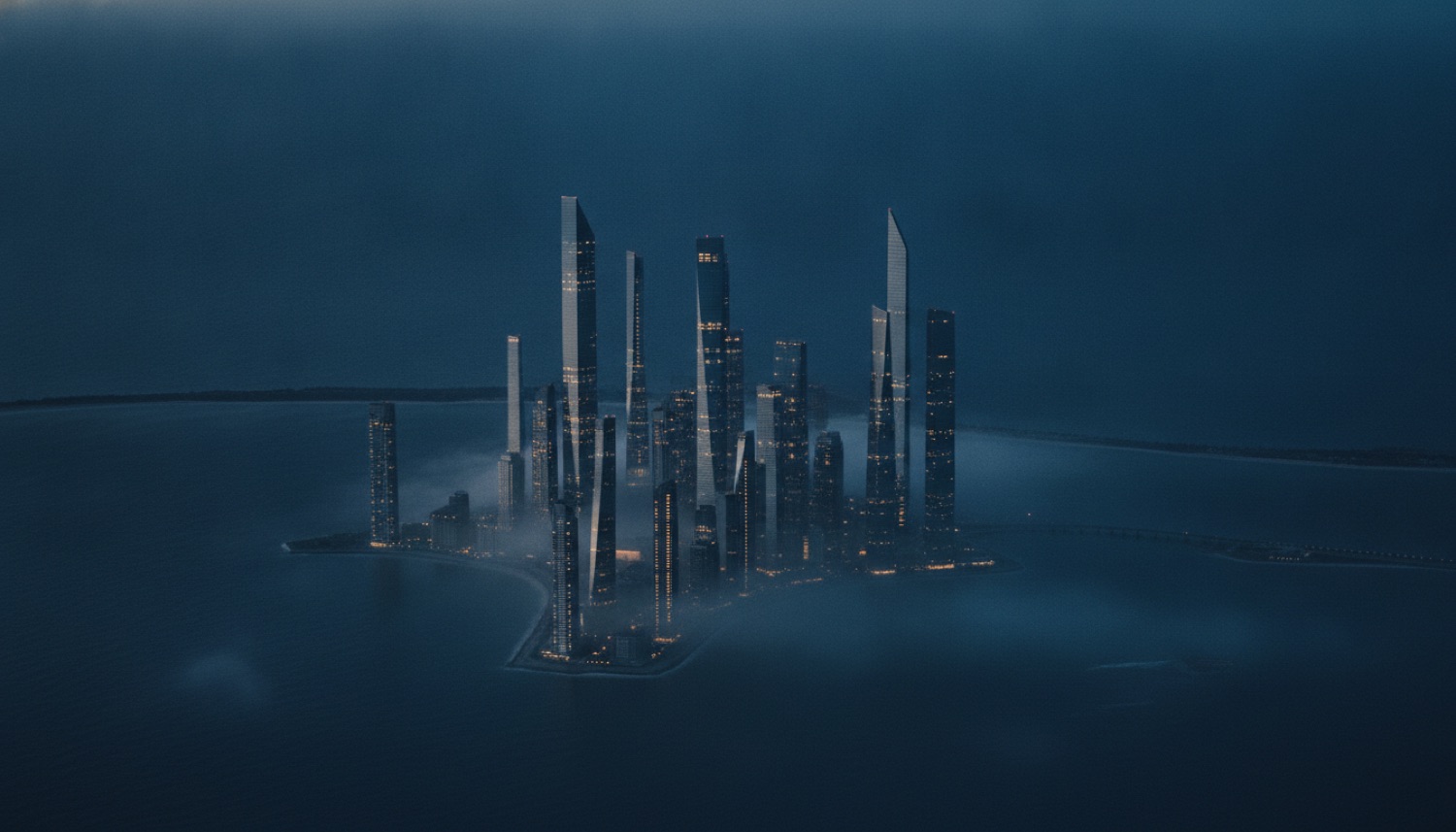
Abu Dhabi Real Estate Deep Dive 2026: Islands, ADGM and the Capital's Quiet Outperformance
Saadiyat up 32%, an AED 60bn ADGM bet on Al Maryah, and a capital that trades supply discipline for durable appreciation.
Abu Dhabi booked AED 142bn in real estate transactions in 2025, and Saadiyat Island posted 32% year-on-year appreciation into Q1 2026. This deep dive maps the capital's investment zones, Saadiyat, Yas, Al Reem, Al Maryah and Hudayriyat, the AED 60bn+ ADGM expansion, and the forward view that makes Abu Dhabi the UAE's quiet outperformer.
The capital's price map: Saadiyat to Al Reem
Abu Dhabi's price map in 2026 is tighter and more supply-disciplined than Dubai's, and that scarcity is the capital's defining feature. Saadiyat Island sits at the apex, with waterfront and cultural-district product clearing roughly AED 2,450 per square foot and entry tickets starting near AED 2 million, the premium justified by limited high-end supply and a cultural anchor no other emirate can match.
Al Maryah Island, the ADGM financial core, follows near AED 2,100 per square foot, where Grade A offices and branded residences trade on the strength of the capital's banking cluster. Al Hudayriyat Island, the AED 10 billion lifestyle and sports destination, is emerging as a genuine prime contender around AED 1,900, led by the elevated Nawayef Hills villa community.
The liquidity band sits lower and yields higher. Yas Island, entertainment-anchored and tourism-heavy, trades near AED 1,450 per square foot with studios from roughly AED 700,000 and one-bedrooms between AED 900,000 and AED 1.2 million. Al Raha Beach holds near AED 1,350, and Al Reem Island, the capital's densest freehold node, near AED 1,250.
The pattern is deliberate. Saadiyat and Al Maryah defend capital and cultural prestige; Yas, Al Raha Beach and Al Reem deliver income. Unlike Dubai, Abu Dhabi's regulator has kept a firm hand on release schedules, which is precisely why Saadiyat posted 32% year-on-year appreciation into Q1 2026 without a matching supply flood.
Supply discipline is the capital's edge, ADREC's metered pipeline is why Saadiyat rose 32% without a supply flood.
The read
Islands in play: Yas, Saadiyat, Al Reem, Al Maryah, Hudayriyat
Abu Dhabi's investment case is an archipelago of masterplanned islands, each with a distinct thesis.
Saadiyat Island is the cultural and capital-appreciation flagship. With the Louvre already open and the Guggenheim Abu Dhabi, Zayed National Museum and Natural History Museum completing the cultural district, Saadiyat pairs scarcity with a global tourism draw. Yields are modest at 4.5-5.5%, but capital growth led the emirate at 32% year-on-year.
Yas Island is the income and lifestyle engine, home to Ferrari World, Yas Waterworld and the Formula 1 circuit. Short-let gross yields run 7-12% and long-lets 6-8%, the strongest risk-adjusted income in the capital.
Al Reem Island is the mass-market freehold core: dense, well-connected and the most liquid resale market in Abu Dhabi, with 2026 price growth forecast in the high teens.
Al Maryah Island is the financial district, where the ADGM cluster and a landmark expansion will add branded residences alongside doubled office supply.
Al Hudayriyat Island is the newest frontier, an AED 10 billion sports, nature and villa destination whose Nawayef Hills community offers larger plots and a design-led identity aimed squarely at end-users.
All five sit inside the Investment Zones opened to full freehold under Law No. 13 of 2019, alongside Al Raha Beach and part of Khalifa City, the legal foundation that lets foreign buyers own and qualify for golden-visa residency. The read for investors: Saadiyat and Al Maryah for prestige and appreciation, Yas for yield, Al Reem for liquidity, Hudayriyat for early-stage upside.
ADGM, the cultural district and the AED 60bn Al Maryah bet
The AED 60 billion catalyst
The defining forward event for Abu Dhabi real estate is the Mubadala-Aldar expansion of Al Maryah Island. The final undeveloped bank of land, nearly 500,000 square metres on the island's north side, carries a gross development value above AED 60 billion and will deliver 1.5 million square metres of office, residential, retail and hospitality space. Enabling works begin in 2026.
For the ADGM, the headline is capacity: more than 450,000 square metres of new Grade A office space, doubling current supply to absorb surging demand from global banks, funds and family offices relocating to the capital. Alongside it, 3,000-plus luxury waterfront residences and three new bridges will knit the financial district to Reem Island and put Saadiyat within a ten-minute drive.
The cultural dividend
Saadiyat's cultural district is the second structural driver. The Louvre Abu Dhabi opened the account in 2017; the Guggenheim Abu Dhabi, Zayed National Museum and Natural History Museum complete a concentration of institutions unmatched in the region. Each opening lifts tourism, hospitality demand and, by extension, residential values in the surrounding zones.
Why it matters
These are not speculative masterplans, they are capitalised, government-backed programmes with defined timelines. For buyers, ADGM's office expansion is a demand engine for Al Maryah and Al Reem residences, while the cultural district underwrites Saadiyat's premium. The capital's forward story is one of institutional capital arriving faster than supply is released, the textbook condition for durable appreciation.
What to expect: the capital's forward view
Abu Dhabi enters the back half of the decade as the UAE's quiet outperformer, and three dynamics define its forward view.
Supply discipline sustains prices. ADREC's controlled release schedule is the capital's structural advantage over Dubai. 2026 price-growth forecasts run 14-24% across the investment zones, led by Al Raha Beach and matched by Al Reem and Yas, precisely because demand from the ADGM build-out and cultural tourism is meeting a deliberately metered pipeline.
The yield-versus-growth split sharpens. Investors must now choose a lane. Saadiyat and Al Maryah offer appreciation and prestige at sub-5.5% yields; Yas Island and Al Reem deliver 6-8% income with lower entry tickets. The middle path, a Yas or Al Reem unit bought off-plan on a payment plan, captures both a construction discount and rental yield on completion.
Institutional capital reshapes demand. The doubling of ADGM office supply is not an abstraction; it seeds thousands of high-income residents who need housing near Al Maryah, Al Reem and Saadiyat. That is a demand thesis with a delivery date attached.
For 2026-2028 the capital rewards patience over speculation. Off-plan in the growth zones, income plays on Yas, and Saadiyat for buyers who value scarcity and culture over yield. Abu Dhabi will not match Dubai's transaction volume, but on price stability, supply control and the calibre of its anchor projects, it is arguably the more defensible market.
- 2019Law No. 13 opens freehold ownershipFull foreign ownership across defined Investment Zones.
- 2017Louvre Abu Dhabi opens on SaadiyatFirst anchor of the Saadiyat cultural district.
- 2025ADREC records AED 142bn in transactionsResidential sales lead the capital's strongest year.
- 2026AED 60bn+ Al Maryah expansion launchedMubadala and Aldar begin enabling works to double ADGM office space.
- 2027Guggenheim and Natural History Museum openSaadiyat's cultural district reaches critical mass.
- 01Supply discipline is the capital's edge, ADREC's metered pipeline is why Saadiyat rose 32% without a supply flood.
- 02Choose your lane: Saadiyat and Al Maryah for appreciation under 5.5% yields; Yas and Al Reem for 6-8% income.
- 03The AED 60bn Al Maryah expansion is a dated demand thesis, doubled ADGM offices seed thousands of high-income residents.
- 04Off-plan in the growth zones captures both a construction discount and rental yield on completion.
Turn the data into a shortlist.
Our desk maps every trend in this report to live stock. Send your brief and get a costed shortlist the same day.
WhatsApp the desk →